
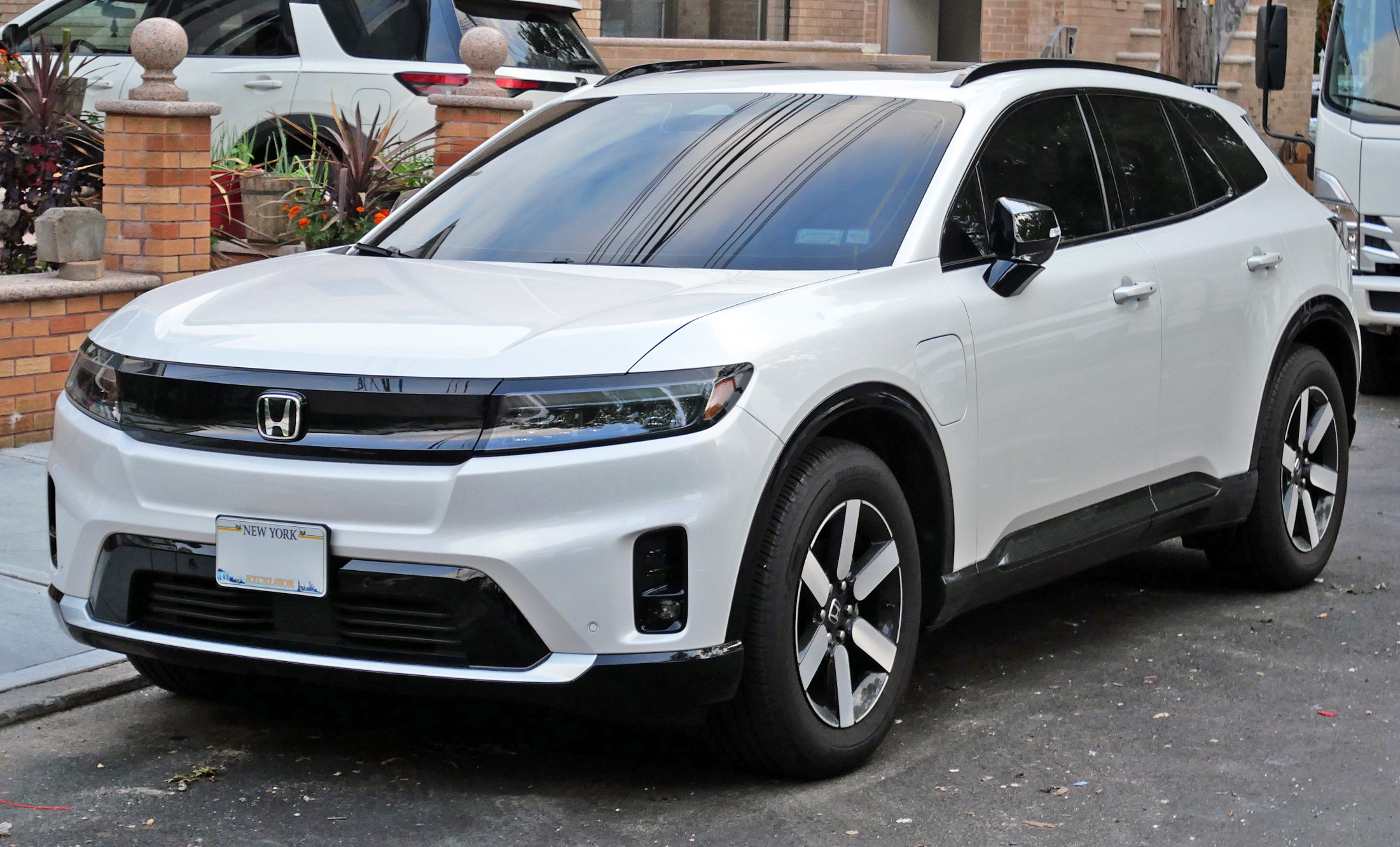
The Honda Prologue EV is not just Honda’s first mainstream electric SUV for many shoppers.
It is also a useful test of how familiar car brands are absorbing connected-car technology.
The interesting part is not only range, battery size, or charging speed.
It is how the GM-platform background, Google built-in software, cabin screens, and charging tools work together in daily use.
Honda presents the Prologue as an all-electric SUV with a technology package that blends EV hardware, embedded Google services, phone compatibility, connected ownership features, and driver-assistance systems. That mix matters because buyers are not only choosing a battery-powered Honda. They are also choosing a software environment they may use every day.
For a shopper comparing the Prologue with other connected SUVs, the better question is simple: what does the technology actually change once the car is in the driveway?
Why The Honda Prologue EV Technology Story Matters
The Prologue sits in an unusual place. It wears a Honda badge, but its EV platform background is tied to General Motors. The Wall Street Journal describes the Prologue as using a GM-engineered foundation shared in context with the Chevrolet Blazer EV, which helps explain why some buyers compare it with GM-related electric SUVs as well as Honda’s own lineup.
That does not mean the Prologue should be judged only as a platform-sharing story. For everyday drivers, the visible technology is the cabin interface, charging workflow, connected services, driver-assistance package, and phone integration.
Honda’s own Prologue page and specifications are the safest places to anchor the basics. Honda lists an 85 kWh battery, available EPA range ratings by trim, DC fast-charging information, Level 2 charging support, HondaLink charging features, Google built-in, wireless Apple CarPlay, wireless Android Auto, Honda Sensing, an 11-inch digital instrument cluster, and an 11.3-inch center touchscreen.
The practical takeaway is that the Prologue should be evaluated as both an EV and a connected device. A test drive should include the screens, voice controls, navigation behavior, phone pairing, charging information, and app experience, not just acceleration and seating comfort.
Cabin Technology: The Screens Are The Daily Interface
The Prologue’s cabin technology starts with two core displays: an 11-inch digital instrument cluster and an 11.3-inch color touchscreen, both listed in Honda’s Prologue specs. That layout gives the driver a familiar split between driving information and infotainment controls.
This matters because EV ownership adds more screen-dependent decisions than a traditional gas vehicle. Range, charge status, route planning, energy use, and charging preparation can all become part of routine driving. A clear display setup can make those tasks feel normal instead of distracting.
The Prologue also includes the kinds of convenience technology shoppers now expect in a modern connected SUV, including USB-C ports and available wireless phone charging depending on trim and equipment. Those details are not headline features, but they affect how easy the vehicle feels to live with.
A good cabin evaluation should answer three plain questions:
- Can the driver find key EV information quickly?
- Does the main screen respond in a way that feels predictable?
- Are climate, audio, phone, and navigation tasks easy to separate while driving?
If the answer is yes, the technology becomes part of the vehicle’s usefulness. If the answer is no, even strong EV hardware can feel harder to enjoy.
Google Built-In Changes The Software Starting Point
Google built-in is one of the Prologue’s most important technology features because it changes where some core functions live. Instead of relying only on a projected phone interface, supported Google services can be part of the vehicle’s native infotainment experience.
Honda’s Google built-in page lists the Prologue among Honda vehicles with Google built-in and describes access to Google Assistant, Google Maps, and compatible apps through Google Play. Google’s own built-in site describes similar functions at the platform level, including voice control, navigation, media apps, and EV-related routing features where available.
For drivers, the useful difference is control. Google Maps can be part of the built-in interface. Google Assistant can handle supported voice requests. Google Play can provide compatible in-car apps, subject to availability, setup, subscriptions, and data requirements.
That does not remove phone projection from the decision. Honda’s Prologue specs list wireless Apple CarPlay and wireless Android Auto, and Honda’s Google built-in information explains that phone projection can still be used in compatible vehicles. In practice, buyers should compare both experiences: the native Google interface and the phone-projection interface they already know.
A simple test is to enter the same destination through the built-in system and through phone projection. Then compare route clarity, voice behavior, audio handoff, charging information, and how quickly the driver can return to the home screen.
Charging Tech Is A Workflow, Not Just A Port
Charging technology is often reduced to one number, but daily EV use is a workflow. The driver needs to know where to charge, what the vehicle is doing, how much time may be needed, and whether the next trip is realistic.
Honda’s Prologue materials describe Level 1, Level 2, and DC fast-charging support, along with public charging access and NACS adapter language. Honda also points to HondaLink charging features, while the Prologue specs list charging status information and related EV displays.
Those features matter most when they reduce guesswork. A useful EV interface should help the driver understand charge level, charging progress, and route context without digging through too many menus.
The important limit is that charging speed is never a guaranteed everyday outcome. Real-world charging can vary with charger capability, battery condition, temperature, state of charge, and station behavior. The Prologue’s published charging figures are still useful for comparison, but buyers should treat them as controlled reference points rather than promises for every stop.
When comparing the Prologue with another EV, look beyond peak charging claims. Compare how each vehicle shows charging status, how navigation handles charging stops, how connected services report progress, and how easy it is to prepare for the next drive.
HondaLink And Connected Ownership Features
HondaLink is part of the Prologue ownership story because connected services can extend the vehicle experience beyond the driver’s seat. Honda’s Prologue information describes HondaLink charging features, and the Prologue specs list HondaLink connected by OnStar.
For shoppers, the value is practical rather than flashy. Connected features may help with charging status, vehicle information, trip preparation, notifications, or parked-vehicle checks depending on setup, service availability, and account configuration.
The best way to evaluate HondaLink is to ask how much it reduces friction. If a driver can check useful information before leaving the house, plan around charging, or understand a vehicle notification more clearly, the app becomes part of the ownership experience.
It is also worth checking what requires setup, connectivity, a compatible phone, an account, trial access, or a paid plan. Connected services are useful only when the driver understands what remains available after the initial setup period.
GM Platform Context: What Buyers Should Take From It
The GM-platform context is important, but it should not dominate the entire Prologue discussion. It helps explain why the Prologue’s EV background differs from what some Honda shoppers may expect, and why comparisons with GM-related EVs appear in buyer research.
The key is to keep the claim narrow. The Prologue has a GM-engineered platform background, according to reliable secondary coverage, while Honda’s public materials define the consumer-facing features, specifications, software, charging information, and trim details.
That means shoppers should use the platform context as one comparison point, not as a shortcut to conclusions about reliability, service cost, resale value, or repair outcomes. Those ownership outcomes need their own evidence and should not be assumed from the platform relationship alone.
In a practical comparison, the platform question should lead to better test-drive questions:
- Does the Prologue feel like a Honda in its interface and controls?
- Does the software experience match what the buyer wants daily?
- Are charging information and route planning clear enough for regular use?
- Are service, warranty, and support details clear from official owner materials?
That approach keeps the platform context useful without turning it into speculation.
Driver Assistance And Safety Tech
Honda Sensing is part of the Prologue technology package, and Honda’s Prologue specs list driver-assistance features across the model. Honda’s broader Honda Sensing page frames these systems as safety and driver-assistive technology.
That framing matters. Driver assistance is not autonomous driving. These features can alert, assist, or support the driver in defined situations, but the driver remains responsible for attention, control, and safe operation.
For a buyer, the best evaluation is not simply whether a feature exists. It is whether the system communicates clearly. Alerts should be understandable. Lane and distance support should feel predictable. Settings should be easy to find. The driver should know when a feature is active, limited, or unavailable.
A connected EV can have impressive screens and software, but the driver-assistance experience must still feel calm and explainable. If the system surprises the driver, the feature list matters less than the real interaction.
What To Compare Before Choosing A Prologue
The Prologue’s technology package makes the most sense when compared against specific daily tasks. A buyer should not stop at whether the SUV has Google built-in, wireless phone projection, HondaLink, and Honda Sensing. The better test is how those systems behave together.
Compare navigation first. Try native Google Maps and phone projection on the same route. Check how charging information appears and whether voice control feels natural.
Compare charging visibility next. Look at the charge screen, instrument display, connected app behavior, and route planning. The goal is not to memorize every menu. It is to see whether the vehicle makes EV planning easier.
Compare cabin controls after that. Climate, audio, phone, navigation, and driver-assistance settings should be easy to understand without turning every action into a screen search.
Finally, compare support and ownership details. Check official Honda materials for trim-specific equipment, connected-service terms, charging accessories, adapter language, and owner guidance. The Prologue is a technology product as much as a vehicle, so the setup and support experience are part of the purchase.
Read More
- Honda Gold Wing Tech: Infotainment, DCT, and Touring Features Explained
- Ford Explorer vs Expedition Infotainment Screens: What Buyers Should Compare
- My Chevrolet App Not Connecting to Vehicle? Practical Checks That Help
- Car Software Issues: How Bad Are They and When Should You Worry?
Bottom Line
The Honda Prologue EV is interesting because its technology story has several layers: a Honda-branded electric SUV, a GM-platform background, Google built-in software, phone projection, connected HondaLink features, charging information, and Honda Sensing driver assistance.
The strongest way to evaluate it is not to focus on one headline feature. Look at how the technology changes daily use. If the screens, native Google tools, phone integration, charging workflow, and driver-assistance feedback feel clear, the Prologue’s tech package can make EV ownership easier to understand.
If those systems feel confusing during a test drive, that is useful information too. For a connected EV, the interface is not a side feature. It is part of the vehicle.
FAQ
Does the Honda Prologue EV have Google built-in?
Yes. Honda lists the Prologue among vehicles with Google built-in, and the Prologue specs include Google built-in as part of the technology package.
Does the Honda Prologue support Apple CarPlay and Android Auto?
Honda’s Prologue specifications list wireless Apple CarPlay and wireless Android Auto. Buyers should still check phone compatibility, setup steps, and trim details.
Is the Honda Prologue built on a GM platform?
Reliable secondary coverage describes the Prologue as using a GM-engineered EV platform background. Honda’s own pages remain the best source for consumer-facing specs and features.
Is Honda Sensing the same as self-driving?
No. Honda Sensing should be treated as driver-assistance technology. The driver remains responsible for attention, control, and safe operation.
What should buyers test first in the Prologue's technology package?
Start with navigation, phone connection, charging information, voice control, and basic cabin settings. Those tasks reveal how the technology feels in normal use.