
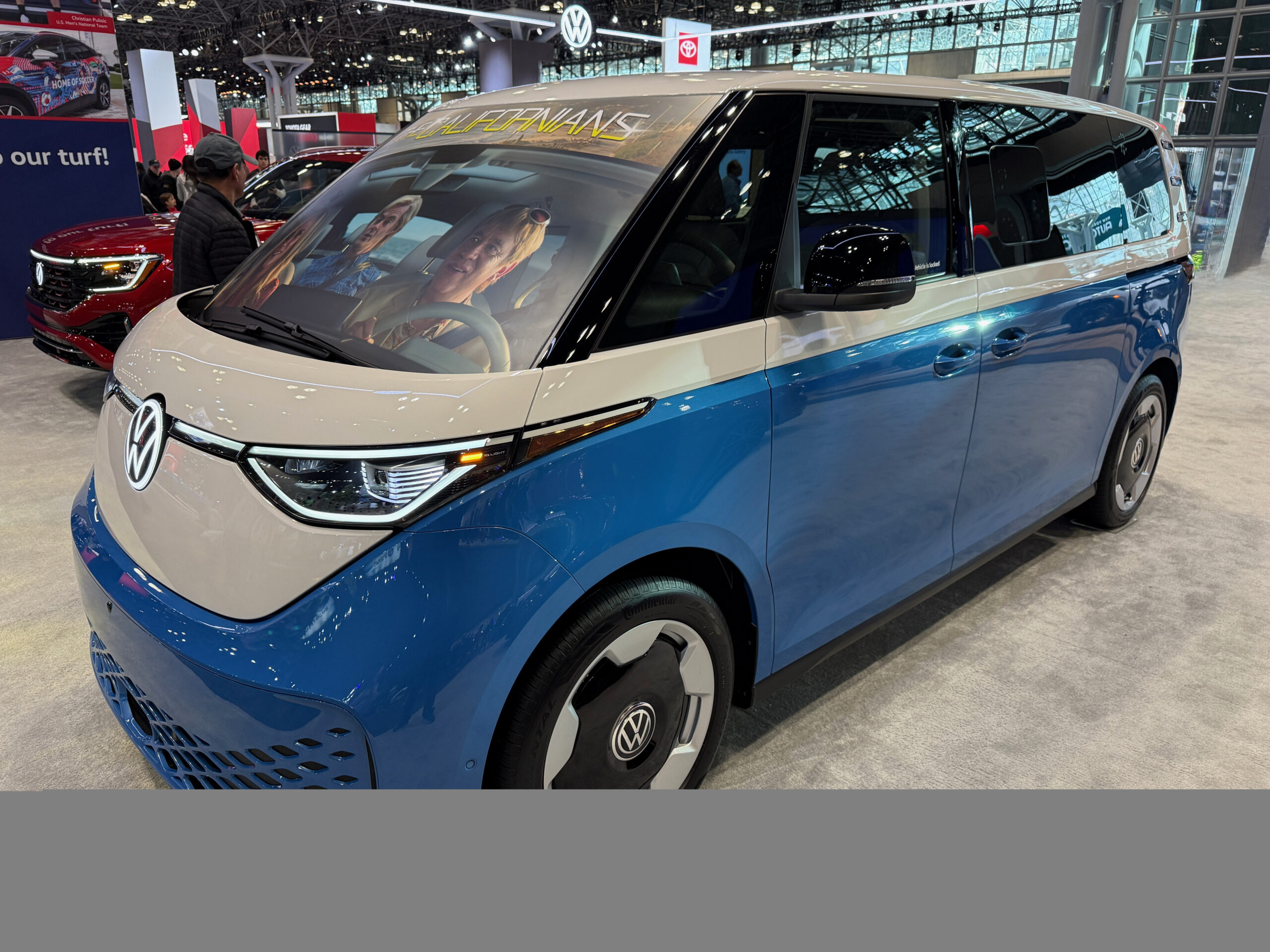
The Volkswagen ID. Buzz is not compelling only because it looks familiar.
Its more useful story starts under the floor.
Electric packaging changes the cabin, the controls, the charging routine, and the tradeoffs buyers need to understand.
Buzz works best as a large connected device on wheels: roomy, distinctive, practical, and still shaped by battery use, software design, charging
access, and the physics of moving a big vehicle.
For families, shuttle users, road-trip crews, and tech-curious drivers, the ID.
The ID. Buzz Is A Technology Story First
The ID. Buzz gets attention because its shape is instantly recognizable. Nostalgia may start the conversation, but it is not the best way to evaluate the van.
The better question is what the electric architecture makes possible, and where it still asks the driver to adapt.
An electric van can use its floor, cabin, and drivetrain layout differently from a conventional gas van. Battery placement supports a broad, low platform. Without a traditional engine layout dominating the front of the vehicle, designers can think differently about cabin volume, passenger space, and overall packaging. The result feels less like a crossover stretched into a box and more like a purpose-built people mover.
That does not automatically make it the easiest EV to live with. A van body has a lot of frontal area. It carries people, luggage, gear, and expectations. The same size that makes it useful also makes efficiency and charging planning more important than they would be in a smaller electric hatchback or sedan.
So the ID. Buzz is clearest when judged through four lenses: space, software, charging, and limits.
Electric Packaging Is The Main Advantage
The strongest technical idea behind the ID. Buzz is packaging.
A van already starts with a practical shape. Add an electric platform and the advantages become clearer: a flat-feeling cabin, generous interior volume, and a body that prioritizes people and cargo over dramatic styling. For daily use, that matters more than a single spec-sheet headline.
This is the kind of vehicle where technology is most visible when nothing feels cramped. Passengers need easy entry, clear sightlines, predictable storage, and a cabin that works for short errands as well as longer trips. The ID. Buzz format supports that job because the vehicle is built around usable interior space.
That packaging also changes how people interact with the van. A large EV can become the family charging hub, school-run vehicle, airport hauler, weekend gear carrier, or road-trip shuttle. Those roles put pressure on details that smaller EV reviews often treat as secondary: door openings, rear-seat access, charging-stop comfort, device charging, climate control, and whether the infotainment system stays simple when several passengers are involved.
The payoff is straightforward. The ID. Buzz makes the most sense for buyers who treat space as a technology feature, not just as a dimension.
Charging Shapes The Ownership Experience
Charging is not just a technical specification for the ID. Buzz. It is part of the ownership model.
A large electric van asks more from the charging routine than a smaller commuter EV. The owner has to think about where the vehicle sleeps, how often it travels with passengers, and whether public charging is a backup plan or a normal part of longer trips.
Home charging is the cleanest fit. If the ID. Buzz can be charged overnight, the vehicle can start most local days with less friction. That turns the van into a predictable household tool: school runs, errands, commuting, appointments, and local weekend use can happen without treating every drive like a logistics problem.
Public charging is different. It can support longer travel, but it introduces variables: charger location, availability, speed, payment setup, route planning, weather, passenger needs, and how much buffer the driver wants. Those variables matter more when the vehicle is full of people or luggage.
Volkswagen frames charging and ownership as part of a connected experience, including app-based tools and Plug&Charge-style convenience where supported. That can help, but the practical lesson is still simple: the smoother the charging setup, the better the ID. Buzz feels.
The van is not just an EV you plug in. It is an EV whose usefulness depends heavily on whether charging fits your real routine.
Connected Services Can Reduce Friction
Connected-car features are most valuable when they remove small annoyances.
For an electric van, those annoyances are easy to picture. You want to check charge status before leaving. You may want climate control ready before passengers get in. You may need route and charging information before a longer drive. You may want ownership settings to be easy for more than one driver.
That is where connected services and app-based controls can make the ID. Buzz feel more modern than a traditional van. They can turn common EV tasks into quick checks instead of repeated manual steps.
But connected features should be treated as support tools, not magic. Apps depend on setup, account access, vehicle connectivity, service terms, and network reliability. Plug-and-charge experiences depend on compatibility and enrollment. Route planning still benefits from driver judgment.
The best way to think about the ID. Buzz is that connected services can make ownership smoother when they work well, but they do not remove the need to understand charging stops, range buffers, and passenger needs.
That balance is important. A large EV van can be wonderfully convenient, but it rewards owners who build simple routines around it.
Cabin Software Has To Work For Everyone On Board
In a sporty car, infotainment can feel secondary. In a family van, it becomes part of the whole ownership experience.
The ID. Buzz cabin has to support navigation, media, climate, phone pairing, charging information, driver settings, and passenger comfort. It also has to do that while different people use the vehicle for different trips.
That raises the standard for interface design. The best cabin tech in a vehicle like this should be quick to understand, consistent, and forgiving. A driver should not need to dig through menus while managing kids, luggage, parking lots, or charging stops. A shared vehicle also needs controls that make sense to someone who was not the last person to drive it.
This is where physical ergonomics and software design meet. Screen size alone does not make a good interface. What matters is whether the driver can complete common tasks quickly: set a destination, find charging information, adjust climate, change audio, pair a phone, and understand vehicle status.
For TechNubo readers comparing Volkswagen’s broader approach to vehicle technology, the ID. Buzz sits in a different category from performance-focused models like the Golf GTI. The GTI is about driver engagement and compact-car tech; the ID. Buzz is about making a large electric space usable.
That contrast makes Volkswagen’s technology choices more interesting across vehicle types. The cabin software in the ID. Buzz succeeds when it fades into the background. In a van, that is a compliment.
Driver Assistance Is Support, Not Autonomy
A vehicle this size benefits from driver-assistance technology because the daily use cases are demanding.
Parking lots, school zones, tight streets, highway traffic, and long family trips all create moments where assistance features can reduce workload. Systems that help with awareness, lane positioning, speed support, parking confidence, or alerts can be meaningful in a large van.
The important boundary is that driver assistance is not self-driving. The driver remains responsible for attention, judgment, and control. That distinction matters because a family-oriented EV can sound more advanced than it feels in real use if the technology is described carelessly.
The practical value is not a futuristic promise. It is the possibility of making a big vehicle feel easier to manage in ordinary situations.
For many drivers, calm support is more useful than dramatic automation language.
The Main Limits Come From Size, Energy, And Use Case
The ID. Buzz has a clear appeal: electric drive, useful space, distinctive design, and modern connected features. Its limits come from the same source as its strengths.
It is a large van. That means energy use, charging rhythm, parking confidence, passenger load, and trip planning matter. A driver who expects it to behave like a small EV may focus on the wrong comparison. A driver who compares it with a conventional family van may need to adjust to charging habits and software-led ownership.
The best fit is someone who can use its space often enough to justify the size and can make charging predictable enough to avoid constant planning stress.
The weaker fit is someone who wants the easiest possible EV, rarely needs the cabin volume, lacks convenient charging, or expects long trips to feel exactly like gas-vehicle travel.
That does not make the ID. Buzz impractical. It makes it specific. It is a strong idea when the buyer’s life matches the vehicle’s strengths.
What Buyers Should Look At First
The smartest way to evaluate the ID. Buzz is not to start with nostalgia, color, or one headline specification.
Start with your week.
Where would it charge? How many people would ride in it regularly? Would the cabin space be used often, or only admired? Would public charging be occasional or routine? Would more than one driver need to manage the app, infotainment, and settings? Would the vehicle spend more time on local duty or long-distance travel?
Those questions reveal whether the technology serves your life or adds new chores.
A smaller EV may be easier to park, charge, and operate efficiently. A conventional van may still feel simpler for certain road-trip habits. The ID. Buzz sits between those worlds: more flexible and expressive than many EVs, but more dependent on charging routines than a gas van.
That middle position is the whole story.
Bottom Line
The Volkswagen ID. Buzz is best understood as an electric packaging experiment that became a real consumer vehicle.
Its strongest tech advantage is the way an EV platform supports a roomy, passenger-focused van. Its connected features can make charging and ownership easier. Its cabin software matters because this is a shared, practical space, not just a driver’s cockpit. Its driver-assistance systems are most useful when they reduce everyday workload.
The limits are just as important. Size affects energy use. Charging access shapes convenience. Software quality matters more in a shared vehicle. Public charging can turn from a feature into a planning task if it does not match the trip.
For the right household or use case, the ID. Buzz is more than a retro design. It is a useful look at what electric vans can become when space, software, and charging all have to work together.
Related articles
- Volkswagen ID.4 EV platform, charging and software tech
- Volkswagen Atlas tech review
- Volkswagen Golf GTI technology and driving experience
FAQ
What technology should I check first on the Volkswagen ID. Buzz?
Start with the cabin software, driver-assistance features, connected services, charging or powertrain behavior, and the trim-specific equipment that changes the daily experience.
Do all Volkswagen ID. Buzz versions have the same technology?
No. Screens, software features, safety assists, audio, cameras, charging support, drivetrain hardware, and connected services can vary by trim, model year, package, and market.
What should I verify before comparing or buying the Volkswagen ID. Buzz?
Confirm the exact trim, software status, official equipment list, service history, recall status when relevant, and whether the features you care about are standard, optional, or market-specific.