
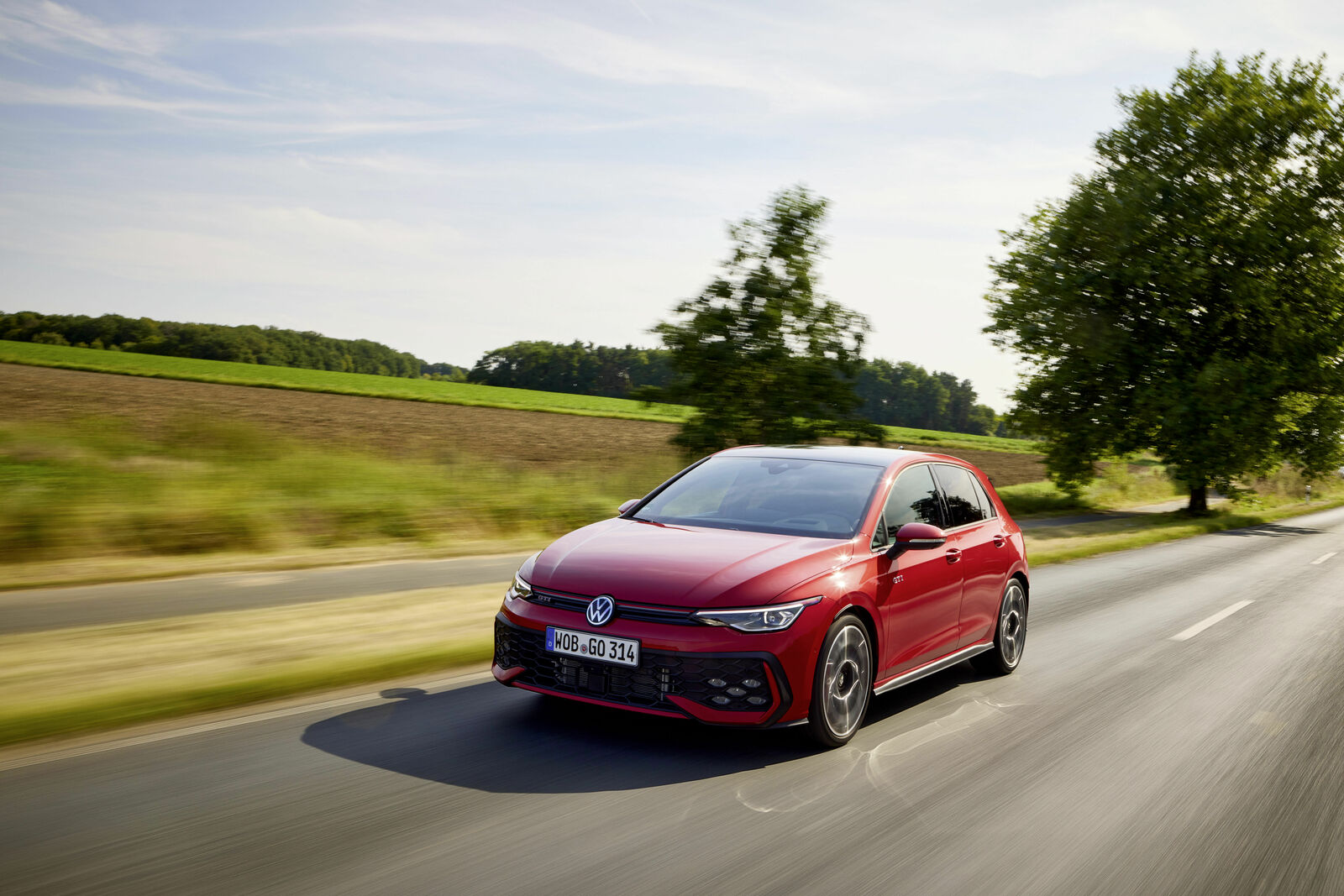
The Golf GTI has always been more than a fast Golf.
The updated model makes that clearer: more power, a sharper digital cockpit, a 12.9-inch infotainment screen, IDA voice assistant and DSG tuning all shape how the car feels before lap times enter the conversation.
That is why the updated Golf GTI matters. Volkswagen has given the latest GTI more power, a redesigned lighting signature, new software, and a revamped infotainment setup. On paper, those details sound like the usual model update. In practice, they say something about where the modern performance hatchback is going.
The GTI is being asked to be two things at once. It has to preserve the direct, compact, fast-reacting character that made the badge famous. It also has to live in a world where buyers expect a sharp digital cockpit, a large central display, usable voice control, connected services, and driver settings that feel coherent rather than buried.
The screen is now part of the GTI experience
Volkswagen says the new GTI uses revamped infotainment systems with a visually free-standing touchscreen. The display measures 12.9 inches, which puts it firmly in the modern-car category: big enough to dominate the center of the dashboard, but still serving a car whose basic mission is driving rather than lounging.
That matters because infotainment has become one of the quickest ways a car can either feel expensive or feel unfinished. In a GTI, the screen has an extra job. It cannot simply be large. It has to keep navigation, audio, vehicle settings, and climate interactions close enough that the driver is not mentally leaving the road every time they make a small change.
The updated setup suggests Volkswagen understands that the GTI audience is not anti-technology. The issue is not screens versus buttons as an abstract argument. The issue is whether the interface supports the rhythm of driving. A good hot hatch should make small decisions feel easy: changing a drive setting, adjusting volume, checking route guidance, or getting back to the main map without hunting through menus.
Volkswagen also mentions illuminated touch sliders for the automatic air conditioner and volume control. That detail is worth watching because it sits at the exact point where modern cabins often divide opinion. Sliders can look clean and futuristic, but they need to be legible and predictable in real life. In a GTI, where the driver may be making quick adjustments while concentrating on traffic or a winding road, the interface has to earn its place.
IDA brings voice control into the hot hatch
The new GTI also gets Volkswagen’s IDA voice assistant, with optional ChatGPT integration for additional questions. That may sound like a novelty, but voice control is one of the more useful places for automotive AI to live if it is handled carefully.
The promise is not that a GTI suddenly becomes a chatbot on wheels. The useful version is more restrained. You ask for information, control supported functions, or get help without stepping through a touchscreen hierarchy. If the assistant can reduce small distractions, it becomes part of the driving experience rather than a separate feature competing for attention.
For consumers who have not bought a GTI before, this is an important shift. The classic GTI pitch was about the engine, steering, size, seats, and everyday usability. The modern pitch includes the intelligence layer around those things. The car still has to be fun, but it also has to feel current when you start it, pair a phone, use navigation, or ask the cabin to do something simple.
Equipment and availability can vary by market and configuration, but the direction is clear: Volkswagen is treating cabin software as part of the GTI identity, not just a feature list attached to the dashboard.
Digital instruments with a performance purpose
Volkswagen says the GTI includes the enhanced Digital Cockpit Pro, its digital instrument display. In a normal compact car, digital instruments are mostly about customization and clarity. In a GTI, they also shape the mood of the drive.
A performance hatchback has to communicate quickly. Speed, revs, gear selection, driver-assistance status, and route prompts all compete for attention. A strong digital cluster can make the car feel more focused because the key information moves closer to the driver’s natural line of sight.
That does not mean every display needs to look like a race car. In fact, the GTI has usually worked best when it feels mature rather than theatrical. The value of a digital cockpit here is that it can adapt: calm for commuting, sharper for a faster road, and clear enough that the driver does not need to decode the interface.
There is also an emotional layer. Volkswagen says the GTI has an Engine/Start/Stop button that pulses red after the doors are opened until the turbocharged engine is started. It is a small interaction, but it is exactly the kind of detail that turns technology into anticipation. The car is communicating before it moves.
Powertrain tech you feel, not just read about
The headline performance number is 195 kW, or 265 PS. Volkswagen says that is 20 PS more than the previous version. The turbocharged engine sends 370 Nm of torque to the front axle, paired with an electronic differential lock, and the car can reach 100 km/h in 5.9 seconds.
Those numbers matter, but the more interesting technology story is the integration. Volkswagen pairs the engine with a seven-speed dual-clutch gearbox in the market context described by its newsroom release. A DSG is not new to the GTI world, but it remains one of the car’s defining technologies because it changes how the power feels.
A good dual-clutch gearbox makes acceleration feel continuous. Volkswagen describes the DSG as transferring power with virtually no interruptions to traction during gear changes. For the driver, that translates into a car that keeps pulling cleanly when the gearbox shifts, especially when accelerating out of a bend or joining faster traffic.
The steering-wheel paddles also matter. They give the driver a way to participate without needing a manual gearbox. For some enthusiasts, that will never replace a clutch pedal. For many buyers, though, the appeal is different: fast automatic shifts during normal driving, manual control when the road gets interesting, and less effort in traffic.
The electronic differential lock is another quiet part of the technology story. Front-wheel-drive performance cars have to manage the conflict between steering and putting power down. The GTI’s charm depends on whether the car can feel eager without feeling unruly. The differential system is part of that balance, helping the front axle handle the engine’s output more effectively.
Lighting as interface, not decoration
The updated GTI also gets new LED headlights and an illuminated front Volkswagen logo. On one level, this is design. On another, it is interface.
Lighting is now one of the main ways cars identify themselves before you see the badge. For the GTI, that matters because the car has always relied on recognizable cues: the stance, the red accents, the compact proportions, the sense that it is a practical Golf with extra intent. The illuminated VW logo and sharper LED signature make the car more readable in a modern traffic stream.
Volkswagen also mentions redesigned LED tail light clusters, which adds to that sense of a cleaner digital-era identity. This is not the most important technology in the car, but it contributes to the way the GTI presents itself as current without abandoning its shape.
Why the GTI still matters
The Golf GTI matters because it brings technology back to a human scale. A lot of modern car tech is sold as spectacle: bigger displays, more automation, more dramatic interfaces. The GTI’s job is different. Its technology has to make a compact car feel sharper, easier to use, and more alive.
That is the interesting tension in this update. The new infotainment system, IDA voice assistant, digital instruments, illuminated controls, DSG gearbox, electronic differential lock, and stronger turbo engine are not separate talking points. They are all parts of the same question: can a modern performance car become more digital without becoming distant?
Volkswagen’s latest GTI suggests the answer can be yes, if the software and hardware serve the drive. The car does not need to pretend to be an EV, a luxury lounge, or a rolling phone. Its technology story is more specific than that.
It is about getting into a familiar hatchback, seeing the screens wake up, starting the engine, choosing your road, and feeling the powertrain, gearbox, displays, and controls work toward the same purpose. That is why the GTI remains one of the more interesting technology cars in the mainstream market: not because it has the most radical interface, but because its best tech is meant to disappear into the act of driving.
Image: Volkswagen Newsroom / Volkswagen AG.
Related articles
- Volkswagen ID.4 EV platform, charging and software tech
- Volkswagen Atlas tech review
- Volkswagen ID. Buzz electric van tech
FAQ
What technology stands out most in the Volkswagen Golf GTI?
The Golf GTI stands out for the way its infotainment, digital cockpit, voice assistant, DSG behavior and powertrain tuning connect cabin software with the driving experience.
Do Golf GTI features vary by market or configuration?
Yes. Screen hardware, voice features, connected services, drivetrain details and equipment can vary by model year, market and configuration, so buyers should check the exact car.
Is the Golf GTI only about performance numbers?
No. Performance matters, but the modern GTI is also shaped by software, display design, voice control, driver settings and how easily the cabin supports everyday driving.