
Kia ADAS can make modern driving feel calmer, but the feature names can blur together quickly.
Drive Wise, Highway Driving Assist, Lane Following Assist, and Smart Cruise Control do not all mean the same thing.
The useful question is simple: what can each system help with, and what still stays on the driver?
This guide explains Kia’s driver-assistance features in plain English, including the limits shoppers should understand before comparing trims.
What Kia ADAS means
ADAS stands for advanced driver assistance systems. In a Kia context, that usually means features designed to help with warnings, steering support, speed support, parking, or nearby-traffic awareness when equipped and when conditions allow.
Kia also uses the Drive Wise name for its driver-assistance technology family. Think of Drive Wise as the umbrella, not a promise that every Kia has the same equipment.
That distinction matters because feature availability can vary by vehicle, trim, market, package, and model year. A familiar feature name on one Kia may not mean identical capability on another.
Drive Wise is a feature family, not one single system
Drive Wise is best understood as Kia’s branded collection of driver-assistance technologies. It can include features that help monitor the road ahead, support lane position, assist with cruise control, warn about nearby traffic, or help during parking maneuvers.
The exact mix depends on the vehicle. That is why shoppers should avoid judging a car only by a broad phrase like "has Drive Wise." The better move is to check the exact feature names in official Kia materials, the owner’s manual, the window sticker, or VIN-specific equipment details.
This keeps expectations realistic. ADAS can reduce workload in certain situations, but it does not remove the need to steer, watch the road, brake when needed, and stay ready to take over.
Forward Collision-Avoidance Assist helps watch ahead
Forward Collision-Avoidance Assist is one of the Kia ADAS names shoppers often see first. In general terms, this type of feature is meant to help monitor the area ahead and support warnings or braking assistance in certain conditions.
The important detail is the exact feature name and the official vehicle material attached to it. When comparing Kia trims, use official wording because capability can vary by vehicle, trim, market, package, and model year.
That may sound like fine print, but it is practical. Two vehicles can have similar-looking safety menus while still offering different sensors, alerts, or assist behavior.
Lane Keeping Assist and Lane Following Assist are not identical
Lane Keeping Assist and Lane Following Assist are easy to confuse because both relate to lane position. They set different expectations for the driver.
Lane Keeping Assist is commonly understood as a feature that can help when the vehicle begins to leave its lane. Lane Following Assist is more about helping the vehicle stay centered in a detected lane under suitable conditions.
Neither feature turns the vehicle into a self-driving car. Lane markings, road shape, weather, speed, traffic, and sensor visibility can all affect how assistance behaves.
The practical takeaway is simple: use these systems as support, not as permission to stop paying attention.
Smart Cruise Control helps with speed and distance
Smart Cruise Control is Kia’s adaptive cruise-control-style assistance. It can help manage speed and following distance when active and when conditions allow.
That makes it different from basic cruise control, which generally maintains a set speed without the same kind of traffic-aware distance support. Smart Cruise Control can be useful on longer drives because it may reduce repeated speed adjustments in traffic flow.
Still, the driver remains responsible for the vehicle. Cruise assistance can be affected by traffic changes, road conditions, cut-ins, curves, weather, and sensor limitations.
Highway Driving Assist combines several support ideas
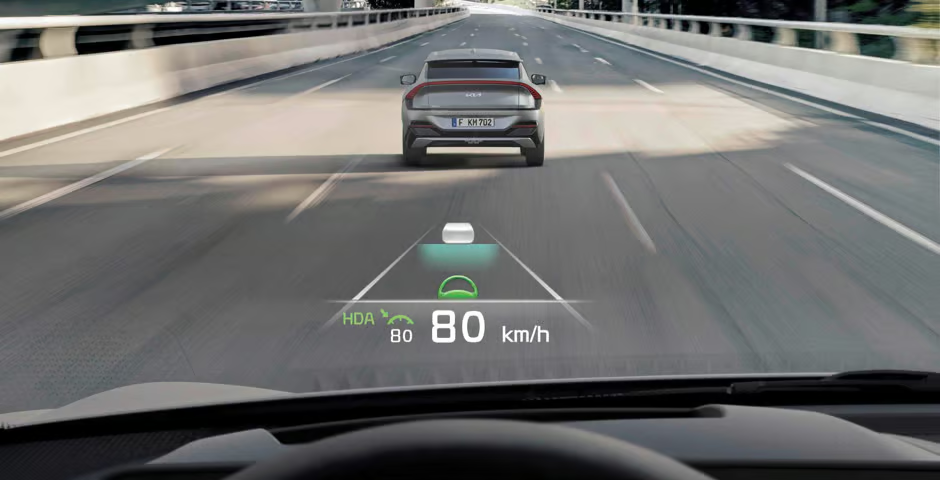
Highway Driving Assist is one of the Kia ADAS names that most often creates inflated expectations. The phrase sounds broad, but it should still be treated as driver assistance.
Where equipped, Highway Driving Assist may combine lane support and speed or following-distance support for certain highway-style driving conditions. It is not a replacement for driver judgment.
That difference matters most in everyday use. A driver still has to supervise the system, keep hands available, monitor traffic, and respond when the road or system behavior requires it.
Blind-spot and rear cross-traffic features help around the vehicle
Kia ADAS can also include features focused on traffic beside or behind the car. Blind-spot assistance can help warn about nearby vehicles that may be hard to see. Rear cross-traffic assistance can help when backing out of a parking space or driveway.
These features are useful because many low-speed risks happen outside the driver’s easiest sightline. A warning from the car can give the driver one more cue before changing lanes or reversing.
Even so, mirrors, shoulder checks, camera views, and direct attention still matter. ADAS should add awareness, not replace it.
Parking and low-speed assistance can reduce stress
Parking assistance is another area where Kia’s driver-assistance features can be valuable. Depending on the vehicle and equipment, available systems may help with warnings, camera views, distance awareness, or low-speed maneuvering support.
The benefit is not just convenience. Parking lots, garages, and tight driveways involve pedestrians, posts, walls, curbs, shopping carts, and vehicles moving at awkward angles.
The limit is also clear: parking assistance depends on sensors, visibility, surroundings, and driver control. It can help, but it cannot guarantee that every obstacle is detected in every situation.
How to compare Kia ADAS features before buying
The cleanest way to compare Kia ADAS is to start with the exact vehicle, trim, model year, market, and package. Then read the official equipment list feature by feature.
Avoid treating a short dealer listing as the final answer. A listing may use broad terms, omit package details, or compress several features into one line. Official Kia materials and owner-manual language are better for understanding what a system is intended to do.
If you are comparing two Kia models, make a short list of the features you actually care about: lane support, adaptive cruise-style support, highway assistance, blind-spot warnings, rear cross-traffic help, parking cameras, or parking sensors. Then verify each one separately.
That approach is slower than scanning a badge or package name, but it prevents the most common mistake: assuming two similar names mean the same real-world capability.
What Kia ADAS cannot promise
Kia ADAS features are driver-assistance tools. They can support attention, comfort, and awareness, but they do not guarantee crash prevention.
They also should not be described as fully autonomous driving. The driver remains responsible for safe operation, including steering, braking, watching the road, and responding to hazards.
This is the normal boundary of driver-assistance technology. The feature may help in the right situation, but the driver has to understand when the situation is no longer right.
A simple way to use Kia ADAS well
The best Kia ADAS experience starts with realistic expectations.
Use warning systems as a second cue, not your first source of awareness. Use lane and cruise support to reduce workload, not to disengage. Use parking assistance to improve visibility, not to stop checking the surroundings.
Before relying on any feature, read the relevant owner’s manual section and learn how the system alerts, cancels, hands control back, or behaves when conditions are poor.
That small habit turns ADAS from a confusing feature list into something more useful: a set of tools you understand before the road gets complicated.
Related Articles
For more practical technology explainers, visit TechNubo Guides.
If you are comparing vehicle technology beyond Kia, read Volkswagen Golf GTI Technology And Driving Experience.
FAQ
Is Kia Drive Wise the same as ADAS?
Drive Wise is Kia’s branded family of driver-assistance technologies. ADAS is the broader term for advanced driver assistance systems.
Do all Kia models have the same Drive Wise features?
No. Equipment can vary by model, trim, market, package, and model year. Check official Kia materials for the exact vehicle.
Is Kia Highway Driving Assist self-driving?
No. Highway Driving Assist is driver assistance. The driver must supervise the vehicle and stay ready to steer, brake, or take over.
What is the difference between Lane Keeping Assist and Lane Following Assist?
Lane Keeping Assist can help when the vehicle drifts from a lane. Lane Following Assist is more focused on helping maintain lane position.
What should I check before relying on a Kia ADAS feature?
Check the owner’s manual, official feature name, trim equipment, package details, and any system limitations for the exact vehicle.