
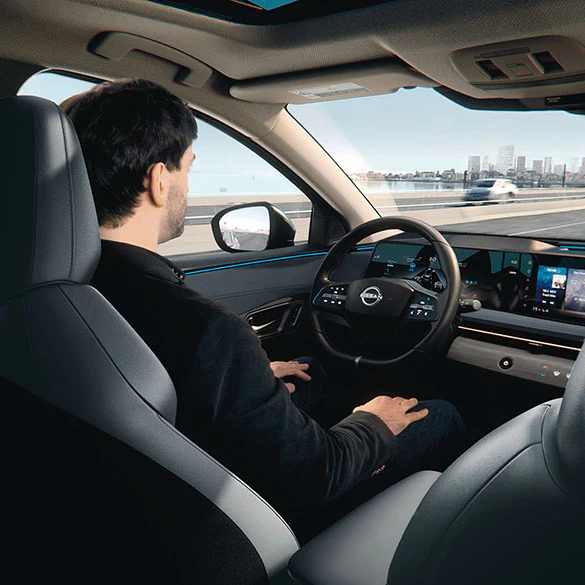
Nissan ProPILOT Assist is not a self-driving system.
It is a driver-assistance package built to reduce strain in supported driving situations.
The real question is what changes inside the car when the feature is active.
That answer depends on sensors, software, road context and the driver’s attention.
What changed, and why it matters
ProPILOT Assist matters because it moves driver assistance from isolated alerts toward coordinated support. Instead of treating lane guidance, speed control and following distance as separate experiences, Nissan presents the system as a package that can help with steering, acceleration and braking in suitable conditions.
That does not turn the vehicle into an autonomous car. The driver still has to supervise the road, keep control available and understand when the system is not the right tool for the situation.
For shoppers and tech-focused drivers, the useful comparison is not just whether a vehicle has ProPILOT Assist. It is how the system communicates status, what roads or conditions it is designed around, and how clearly the cabin tells the driver what is happening.
Cabin technology: the driver is still part of the system
The cabin experience is central to ProPILOT Assist because driver-assistance technology is only useful when the person behind the wheel understands it. Nissan’s public descriptions keep the driver in the loop rather than presenting the feature as driver-free automation.
In daily use, that means the cabin has to answer simple questions quickly. Is assistance available? Is it active? Does the system expect hands on the wheel? Is the driver still paying attention? A good driver-assistance interface should reduce confusion, not create a second task.
ProPILOT Assist 2.1 adds another layer because Nissan describes supported hands-free highway driving in mapped highway contexts. That makes cabin cues and driver monitoring especially important. The system may reduce steering workload in supported circumstances, but it does not remove driver responsibility.
Screens, controls and software behavior
The software side of Nissan ProPILOT Assist is where many drivers will feel the difference. The system is not just a button on the steering wheel. It is a set of status messages, visual cues and control logic that has to make assistance feel predictable.
When a driver-assistance feature is clear, the driver can tell whether it is helping with lane centering, following distance or speed control. When it is unclear, the driver may not know whether the system is active, limited or waiting for a condition to change.
That is why screens and controls matter. The most important software feature is not a flashy animation. It is honest feedback at the moment the driver needs to make a decision.
Driver assistance and safety tech: helpful support, not autonomy
Nissan positions ProPILOT Assist as driver assistance. The system can support steering, acceleration and braking functions in supported circumstances, but the driver remains responsible for driving.
That distinction is important because words like hands-free can be misunderstood. In Nissan’s ProPILOT Assist 2.1 context, hands-free operation is tied to supported highway driving and system conditions. It should not be read as permission to stop supervising the road.
The safest way to understand the feature is as workload support. It can help make certain highway driving situations feel more managed, but it is still bounded by vehicle hardware, software behavior, road context and driver attention.
The platform context: sensors, maps and software are the platform
Nissan’s public materials describe ProPILOT Assist around cameras, radar, sonar, high-definition map data, cabin cues and software behavior.
That mix shows why modern driver assistance is a platform feature, not just a single convenience option. The car has to sense the road, interpret lane and traffic context, communicate with the driver and decide when assistance should continue or hand more responsibility back to the person driving.
For ProPILOT Assist 2.1, Nissan’s map-focused materials are especially relevant. The more advanced experience depends on supported highway contexts, which makes road coverage and feature availability part of the technology story.
Ownership and daily-use implications
For a driver, the practical value of ProPILOT Assist depends on the kind of driving they do. A person who spends a lot of time on divided highways may notice the system more often than someone whose trips are mostly short, urban or irregular.
It also depends on expectations. ProPILOT Assist is easier to evaluate when the driver treats it as assistance with limits. Expecting it to behave like a full self-driving system creates the wrong standard and can make normal limitations feel like failures.
Before relying on any advanced driver-assistance feature, owners should review the vehicle’s official owner guidance and pay attention to in-car messages. The vehicle’s configuration, software, model year, options and local road context can affect what is available.
What to compare next
If you are comparing Nissan ProPILOT Assist with other driver-assistance systems, start with the experience rather than the branding.
Look at what the system supports, how it communicates status, what roads it is designed around, and how easy it is to understand when conditions change. Also compare how each vehicle handles connected services, software updates and cabin controls, because driver assistance now depends heavily on the broader digital platform.
Do not compare these systems only by the most advanced phrase in the brochure. Compare the everyday handoff between vehicle and driver.
Related articles
- Driver Assistance Features
- Highway Driving Assist (HDA)
- Nissan Connect App Not Working: Causes and Fixes
- Is Nissan Connect Worth It in 2026? Honest Review Guide
FAQ
Is Nissan ProPILOT Assist self-driving?
No. Nissan ProPILOT Assist is driver-assistance technology. The driver remains responsible for supervising the road and controlling the vehicle.
What does ProPILOT Assist help with?
Nissan describes ProPILOT Assist as support for steering, acceleration and braking functions in supported conditions, depending on the vehicle and system setup.
What is different about ProPILOT Assist 2.1?
Nissan describes ProPILOT Assist 2.1 around supported hands-free highway driving, high-definition map context and driver-attention requirements.
Can every Nissan use the same ProPILOT Assist features?
No. Availability can depend on model year, trim, package, options, hardware, software and road context. Check the exact vehicle’s official materials.
What should drivers compare before choosing it?
Compare supported conditions, cabin alerts, ease of use, connected-service context and how clearly the system tells the driver when assistance changes.
Sources
- Nissan USA: ProPILOT Assist overview
- Nissan USA: ProPILOT Assist technology page
- Nissan USA: ProPILOT Assist 2.1 driving map context
- MotorTrend: ProPILOT Assist 2.1 quick review context